
Introduction
Generative Engine Optimization 2026 is transforming the way businesses approach search and digital marketing. With the rise of AI-powered platforms like ChatGPT and Google Gemini, traditional SEO is no longer enough to stay visible online.In 2026, search is no longer just about ranking on Google—it’s about being featured in AI-generated answers. Generative Engine Optimization (GEO) focuses on creating high-quality, structured, and authoritative content that AI systems can understand, trust, and recommend.Whether you are a student, marketer, or business owner, understanding GEO is essential to stay ahead in this AI-driven digital landscape. In this guide, you’ll learn what GEO is, why it matters, and how to use it to boost your online presence.
The way people search online is changing faster than ever. Earlier, users depended on search engines to find links and visit multiple websites to get answers. Today, with the rise of AI-powered tools like ChatGPT and advanced search features from Google, users expect instant, accurate, and conversational responses. This shift has introduced a new concept in digital marketing known as Generative Engine Optimisation (GEO).
GEO is not just an upgrade to SEO—it is a completely new approach that focuses on making your content part of AI-generated answers. For MSDM students, marketers, and business owners, understanding GEO is essential to stay competitive in 2026 and beyond.
What is Generative Engine Optimization (GEO)?
Generative Engine Optimisation (GEO) is the process of creating and structuring content so that AI engines can understand, trust, and use it while generating answers. Unlike traditional SEO, where the goal is to rank on search engine results pages, GEO focuses on becoming a reliable source of information for AI platforms.

When a user asks a question, AI tools analyse multiple sources and generate a response. If your content is clear, structured, and authoritative, it has a higher chance of being included in that response. In simple terms, GEO helps your content move from being a link to becoming the answer itself.
“The best way to win in modern search is to be the best answer.” — Rand Fishkin
Difference Between SEO, AEO, and GEO
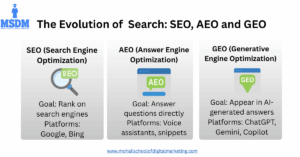
Understanding the difference between SEO, AEO, and GEO is important for building a strong digital strategy. SEO (Search Engine Optimisation) focuses on improving rankings and driving traffic to websites. AEO (Answer Engine Optimisation) focuses on providing direct answers, such as featured snippets or voice search results. GEO, on the other hand, focuses on optimising content for AI-generated responses.
In today’s digital environment, these three strategies work best when combined. SEO brings visibility, AEO provides quick answers, and GEO ensures your content becomes part of AI-driven conversations.
Key Elements of Generative Engine Optimization
Clear and Direct Content
Content should answer user queries in a simple and easy-to-understand way. AI tools prefer content that is precise and informative rather than lengthy and complicated.
Structured Format
Using proper headings (H1, H2, H3), short paragraphs, and bullet points improves readability and helps AI engines understand the content hierarchy.
Authority and Credibility
AI systems prioritise content that appears trustworthy. Including accurate information, examples, and updated insights increases your credibility.
Context-Based Writing
Instead of focusing only on keywords, Generative Engine Optimisation (GEO) emphasises understanding user intent and providing meaningful content that solves real problems.
Why Generative Engine Optimization is Important in 2026

The growing influence of artificial intelligence in search has completely transformed how users interact with information online. In the past, people relied on traditional search engines to browse multiple websites, compare sources, and manually find answers. However, in 2026, this behaviour shifted significantly. Users now prefer instant, accurate, and conversational responses provided by AI tools like ChatGPT and advanced search features developed by Google. This shift means that businesses and marketers can no longer depend solely on traditional SEO strategies to maintain visibility.
Generative Engine Optimization (GEO) has emerged as a crucial approach in this new environment. Instead of focusing only on rankings and clicks, GEO ensures that your content becomes part of AI-generated answers. When users ask questions, AI engines analyse multiple sources and generate a response. If your content is clear, structured, and authoritative, it has a higher chance of being included in these responses. This fundamentally changes the goal of digital marketing—from attracting clicks to becoming a trusted source of information.
For businesses, this shift presents both a challenge and an opportunity. Brands that fail to adapt to AI-driven search risk losing visibility, even if they rank well on traditional search engine results pages. On the other hand, businesses that adopt GEO can position themselves as industry leaders by consistently appearing in AI-generated responses. This builds credibility, increases brand recognition, and influences user decisions at an early stage of the customer journey.
For MSDM learners, understanding GEO is essential to stay competitive in the evolving digital marketing landscape. As companies increasingly look for professionals who can work with AI-driven tools and strategies, having expertise in GEO provides a strong advantage. It not only enhances career opportunities but also prepares students for the future of marketing, where AI and automation play a central role.
Benefits of Generative Engine Optimization for Businesses
Generative engine optimisation offers a wide range of benefits for businesses aiming to grow in a competitive digital environment. One of the most significant advantages is increased brand authority. When your content is selected by AI engines and included in generated responses, it signals that your brand is a reliable and trustworthy source of information. This builds credibility not only with users but also with search platforms.
Another important benefit is enhanced visibility without relying entirely on website clicks. In traditional SEO, success is often measured by traffic and click-through rates. However, with Generative Engine Optimization (GEO), your brand can gain exposure even if users do not immediately visit your website. Being featured in AI-generated answers ensures that your brand remains top-of-mind, influencing decisions and creating long-term engagement.
GEO also contributes to improved content quality. Since AI systems prioritise well-structured, clear, and valuable content, businesses are encouraged to produce high-quality material that genuinely helps users. This results in better user experiences, increased trust, and stronger relationships with audiences.
Additionally, GEO supports long-term digital growth. As AI continues to evolve, businesses that invest in GEO strategies today will be better positioned to adapt to future changes. It allows companies to stay ahead of competitors and maintain a strong presence across multiple digital platforms.
How to Optimize Content for Generative Engine Optimization
To succeed with Generative Engine Optimization, it is important to focus on creating content that is clear, structured, and valuable. The first step is to understand user intent and provide direct answers to common questions. AI engines prefer content that delivers precise information without unnecessary complexity, so writing in a simple and conversational tone is highly effective.
Structured content plays a key role in GEO. Using proper headings such as H1, H2, and H3 helps organise information and makes it easier for AI systems to interpret your content. Breaking down information into smaller sections, using bullet points, and maintaining logical flow improves readability and increases the chances of your content being selected.
Another important aspect is building authority and trust. Including real examples, data, and insights demonstrates expertise and credibility. AI engines prioritise content that appears reliable and well-researched, so it is essential to maintain accuracy and relevance.

Context is also more important than ever. Instead of focusing only on keywords, content should address the broader meaning behind user queries. Writing naturally and aligning your content with user intent ensures that it remains relevant in AI-driven search environments.
Consistency is key when implementing Generative Engine Optimization (GEO) strategies. Regularly updating content, improving structure, and adding valuable insights can significantly enhance your chances of being featured in AI-generated responses. By combining these practices, businesses and marketers can create content that stands out in the evolving digital landscape.
Conclusion
Generative engine optimisation is shaping the future of digital marketing by redefining how content is discovered and consumed. It represents a major shift from traditional search strategies to AI-driven content experiences, where the focus is no longer just on rankings but on delivering value through intelligent systems. Businesses must move beyond simply attracting traffic and instead aim to become trusted sources of information that AI engines rely on.
For Mohali School of Digital Marketing students, professionals, and business owners, adopting GEO is not just a trend—it is a necessity. As AI continues to influence search behaviour, those who understand and implement GEO strategies will have a significant advantage in the digital space. By focusing on clarity, structure, authority, and user intent, it is possible to create content that not only ranks but also becomes part of AI-generated answers.
In the coming years, the integration of SEO, AEO, and GEO will define successful digital marketing strategies. Those who adapt early will lead the industry, while others risk falling behind. GEO is not just the future—it is the present, and embracing it today will ensure long-term growth, visibility, and success in the ever-evolving world of digital marketing.