
How to Build a Strong Portfolio as a Digital Marketer
Introduction
Building a strong portfolio as a digital marketer is not optional anymore—it’s your proof of skill in a highly competitive industry. Whether you are a beginner or an experienced professional, your portfolio acts as a live demonstration of your capabilities, showcasing how you think, execute, and deliver results. Unlike traditional resumes, a digital marketing portfolio tells a story through real campaigns, data, and outcomes. It allows potential employers or clients to see not just what you claim, but what you have actually achieved. In today’s results-driven landscape, businesses want marketers who can show measurable impact—traffic growth, lead generation, conversion improvements, and ROI. A well-crafted portfolio bridges the gap between theory and execution, helping you stand out instantly. It also builds trust, as it reflects transparency and confidence in your work. From SEO campaigns to paid ads, content marketing, email automation, and analytics insights, every piece of work you include should contribute to a cohesive narrative about your expertise. The key is not just to collect work samples, but to present them strategically. This blog will guide you through the process of creating a powerful digital marketing portfolio that not only attracts attention but also converts opportunities into real career growth.
“The best way to sell something is to earn the trust of your audience.”Rand Fishkin

Why a Digital Marketing Portfolio Matters
A digital marketing portfolio is your personal brand asset that speaks louder than any certification or degree. In an industry where trends evolve rapidly and tools constantly change, practical experience becomes the most valuable currency. Employers and clients are less interested in what you know and more focused on what you can do. A strong portfolio demonstrates your ability to apply strategies in real-world scenarios, solve problems, and achieve business goals. It provides credibility by showing actual results such as increased website traffic, improved engagement rates, or higher conversion rates. Additionally, it helps differentiate you from other candidates who may have similar qualifications but lack tangible proof of their skills. A well-structured portfolio also reflects your professionalism, attention to detail, and understanding of user experience. It shows that you can not only execute campaigns but also present data in a meaningful way. For freelancers and consultants, a portfolio is even more critical as it acts as your primary sales tool. It builds confidence in potential clients and reduces their perceived risk in hiring you. Ultimately, a digital marketing portfolio is not just a collection of projects—it is a strategic tool that communicates your value, expertise, and potential impact.
Key Elements of a Strong Portfolio
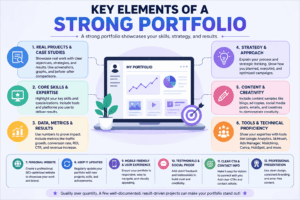
Showcase Real Projects and Case Studies
One of the most important aspects of a strong digital marketing portfolio is the inclusion of real projects and detailed case studies. Instead of simply listing the tasks you have performed, focus on telling a story for each project. Start by explaining the objective—what problem were you trying to solve? Then describe the strategy you implemented, including tools, platforms, and techniques used. Finally, highlight the results with clear metrics such as traffic growth, lead generation, click-through rates, or revenue increase. This approach not only demonstrates your technical skills but also your strategic thinking and problem-solving ability.
Highlight Your Core Skills and Expertise
Your portfolio should clearly communicate your core skills and areas of expertise. Digital marketing is a broad field that includes SEO, PPC, social media marketing, content creation, email marketing, and analytics. Instead of trying to showcase everything, focus on your strengths and what you want to be known for. Create dedicated sections in your portfolio for each skill, supported by relevant examples and results. For instance, if SEO is your strength, include keyword research samples, ranking improvements, and organic traffic growth data. If you specialize in paid advertising, showcase campaign performance, ad creatives, and ROI metrics.
Include Data, Metrics, and Results
In digital marketing, results are everything. A strong portfolio must include data-driven insights and measurable outcomes to validate your work. Simply stating that you managed a campaign or created content is not enough—you need to show the impact of your efforts. Use specific metrics such as percentage increase in traffic, conversion rates, cost per acquisition, return on ad spend, or engagement rates. These numbers provide concrete evidence of your effectiveness and help build trust with your audience. Whenever possible, include before-and-after comparisons to highlight the difference your work made. .
Demonstrate Tool Proficiency and Technical Skills
A strong digital marketing portfolio should clearly reflect your familiarity with industry-relevant tools and technologies. Employers and clients often look for candidates who can efficiently use platforms like analytics tools, ad managers, SEO tools, and CRM systems. Instead of just listing tools, explain how you have used them in real projects. For example, mention how you tracked website performance, optimized campaigns, or automated workflows. This practical demonstration of tool usage shows that you are not only theoretically knowledgeable but also capable of executing tasks effectively. Highlighting your technical skills adds depth to your portfolio and increases your credibility as a results-driven marketer.
Showcase Content Creation and Creativity
Content plays a crucial role in digital marketing, so your portfolio should reflect your creative abilities. Include samples of blog posts, social media creatives, ad copies, email campaigns, or video scripts that you have worked on. Explain the purpose behind each piece of content and how it contributed to achieving marketing goals. Creativity combined with strategy is highly valued in the industry, and showcasing both can make your portfolio stand out. Even if you are a beginner, you can create sample content projects to demonstrate your skills and understanding of audience engagement.
Highlight Campaign Strategy and Planning
Beyond execution, your ability to plan and strategize campaigns is what sets you apart as a professional marketer. Use your portfolio to explain how you planned campaigns from start to finish. Describe your target audience, campaign goals, budget allocation, and channel selection. This gives a clear picture of your strategic mindset and your ability to think beyond basic tasks. A well-documented strategy shows that you understand the bigger picture and can contribute to business growth effectively.
Include Personal Projects and Experiments
If you lack professional experience, personal projects can be a powerful addition to your portfolio. Running your own blog, managing a social media page, or experimenting with ad campaigns can demonstrate your initiative and passion for digital marketing. Document these projects in detail—what you tried, what worked, what didn’t, and what you learned. This not only shows your practical skills but also your willingness to learn and improve continuously.
Focus on User Experience and Customer Journey
A great portfolio also reflects your understanding of user behavior and customer journey. Explain how your strategies improved user experience, increased engagement, or guided users through the conversion funnel. For instance, you can discuss how you optimized landing pages, improved website navigation, or created targeted content for different stages of the buyer’s journey. This demonstrates that you think from a user-centric perspective, which is essential in modern digital marketing.
Show Adaptability and Learning Ability
Digital marketing is constantly evolving, and your portfolio should reflect your ability to adapt to new trends and technologies. Include examples where you learned a new tool, adopted a new strategy, or improved campaign performance through experimentation. This shows that you are proactive and open to change—qualities that are highly valued in the industry. Highlighting your learning journey can make your portfolio more relatable and inspiring.
Add Performance Comparisons and Insights
To make your portfolio more impactful, include comparisons that show growth over time. For example, compare campaign performance before and after optimization or show how your strategies improved key metrics. Along with the data, provide insights into why certain changes worked. This not only strengthens your case studies but also demonstrates your analytical thinking and decision-making skills.
Incorporate Visual Storytelling
Visual elements can significantly enhance the effectiveness of your portfolio. Use charts, infographics, dashboards, and screenshots to present your work in a more engaging way. Visual storytelling helps simplify complex data and makes your portfolio more appealing to viewers. A well-designed presentation also reflects your attention to detail and understanding of digital aesthetics.
Emphasize Results-Oriented Approach
Ultimately, your portfolio should communicate one key message—you can deliver results. Every project, skill, or example you include should connect back to measurable outcomes. Whether it’s increasing website traffic, improving engagement, or generating leads, make sure your achievements are clearly highlighted. This results-focused approach positions you as a valuable asset to any organization or client.
How to Present Your Portfolio Effectively
Create a Personal Website
Having a personal website is one of the most effective ways to present your digital marketing portfolio. It serves as a central hub where you can showcase your work, skills, and achievements in a professional and organized manner. A well-designed website reflects your understanding of user experience, design principles, and branding—qualities that are essential in digital marketing. Your website should include key sections such as an introduction, portfolio projects, case studies, skills, and contact information. Make sure it is visually appealing, easy to navigate, and optimized for both desktop and mobile devices.
Keep It Updated and Relevant
A portfolio is not a one-time project—it is an ongoing process that should evolve with your career. Keeping your portfolio updated and relevant is crucial to maintaining its effectiveness. As you gain more experience and work on new projects, make sure to add them to your portfolio and remove outdated or less impactful content. This ensures that your portfolio always reflects your current skill level and expertise.
Optimize for User Experience (UX) and Navigation
An effective portfolio is not just about content—it’s also about how easily users can explore it. A clean, intuitive layout ensures that visitors can quickly find the information they need without confusion. Use simple navigation menus, clear headings, and logical content flow to guide users through your portfolio. Avoid clutter and unnecessary elements that may distract from your work. A smooth user experience reflects your understanding of digital behavior and demonstrates your ability to design customer-friendly platforms—an essential skill in digital marketing.
Make Your Portfolio Mobile-Friendly
With a large portion of users accessing websites via mobile devices, it is essential that your portfolio is fully responsive. A mobile-friendly design ensures that your content looks professional and functions properly on all screen sizes. Test your portfolio across different devices to ensure fast loading times, readable text, and easy navigation. A responsive portfolio not only improves user experience but also positively impacts SEO rankings, making your work more discoverable online.
Use Strong Personal Branding
Your portfolio should clearly reflect your personal brand. This includes consistent use of colors, fonts, tone of voice, and messaging across all sections. A strong personal brand helps you stand out and makes your portfolio more memorable. Include a professional photo, a compelling bio, and a clear value proposition that explains what you do and how you can help businesses grow. Consistency in branding builds trust and creates a lasting impression on visitors.
Include a Clear Call-to-Action (CTA)
An often-overlooked element of portfolio presentation is a clear call-to-action. After exploring your work, visitors should know exactly what to do next. Whether it’s contacting you, scheduling a consultation, or downloading your resume, a strong CTA guides them toward taking action. Place CTAs strategically throughout your portfolio to increase engagement and conversion opportunities.
Leverage SEO to Increase Visibility
Your portfolio should not only impress visitors but also attract them. By applying SEO techniques such as keyword optimization, meta descriptions, and image alt text, you can improve your website’s visibility on search engines. This demonstrates your practical knowledge of SEO while also helping potential clients and employers discover your work organically. A well-optimized portfolio acts as both a showcase and a lead generation tool.
Integrate Social Proof and Online Presence
Connecting your portfolio with your professional online presence can strengthen your credibility. Include links to platforms like LinkedIn, where visitors can verify your experience and endorsements. You can also showcase client testimonials, project collaborations, or social media achievements. This integration creates a more complete professional image and builds trust with your audience.
Track Performance and Improve Continuously
Just like any marketing campaign, your portfolio should be monitored and optimized over time. Use analytics tools such as to track visitor behavior, page views, and engagement levels. These insights can help you understand what works and what needs improvement. By continuously analyzing and refining your portfolio, you ensure it remains effective and aligned with your goals.
Showcase Versatility with Multiple Formats
To make your portfolio more engaging, present your work in different formats such as videos, presentations, PDFs, and interactive dashboards. This not only makes your portfolio visually appealing but also demonstrates your ability to work across various content types. A diverse presentation style can capture attention and keep visitors engaged for longer.
Ensure Fast Loading Speed and Performance
Website performance plays a crucial role in user experience. A slow-loading portfolio can lead to high bounce rates and missed opportunities. Optimize images, reduce unnecessary scripts, and use efficient hosting to ensure your website loads quickly. A fast and smooth experience reflects professionalism and enhances user satisfaction.
Maintain Consistency and Professionalism
Consistency in design, tone, and structure is key to creating a polished portfolio. Ensure that all sections follow a uniform style and that your content is free from errors. A professional presentation reflects attention to detail and builds confidence in your abilities. Regularly reviewing and refining your portfolio helps maintain high standards.
Conclusion
Building a strong portfolio as a digital marketer is not just about showcasing your work—it’s about telling your professional story with clarity and impact. At MSDM, we believe a well-crafted portfolio reflects your practical skills, creativity, and ability to deliver measurable results. By working on real-world projects, mastering in-demand tools, and focusing on data-driven strategies, students can create portfolios that truly stand out in today’s competitive market.
A powerful portfolio highlights your expertise in areas like SEO, social media marketing, performance marketing, and content strategy while demonstrating real outcomes such as increased traffic, engagement, and conversions. With guidance from MSDM’s expert trainers and hands-on learning approach, you can build a portfolio that not only showcases your capabilities but also builds strong credibility in the industry.
Remember, your portfolio is your personal brand. Keep it updated, make it result-oriented, and present it professionally through a personal website or digital platform. With the right training and consistent effort, your portfolio can unlock exciting career opportunities and set you on the path to success in the digital marketing world with MSDM.